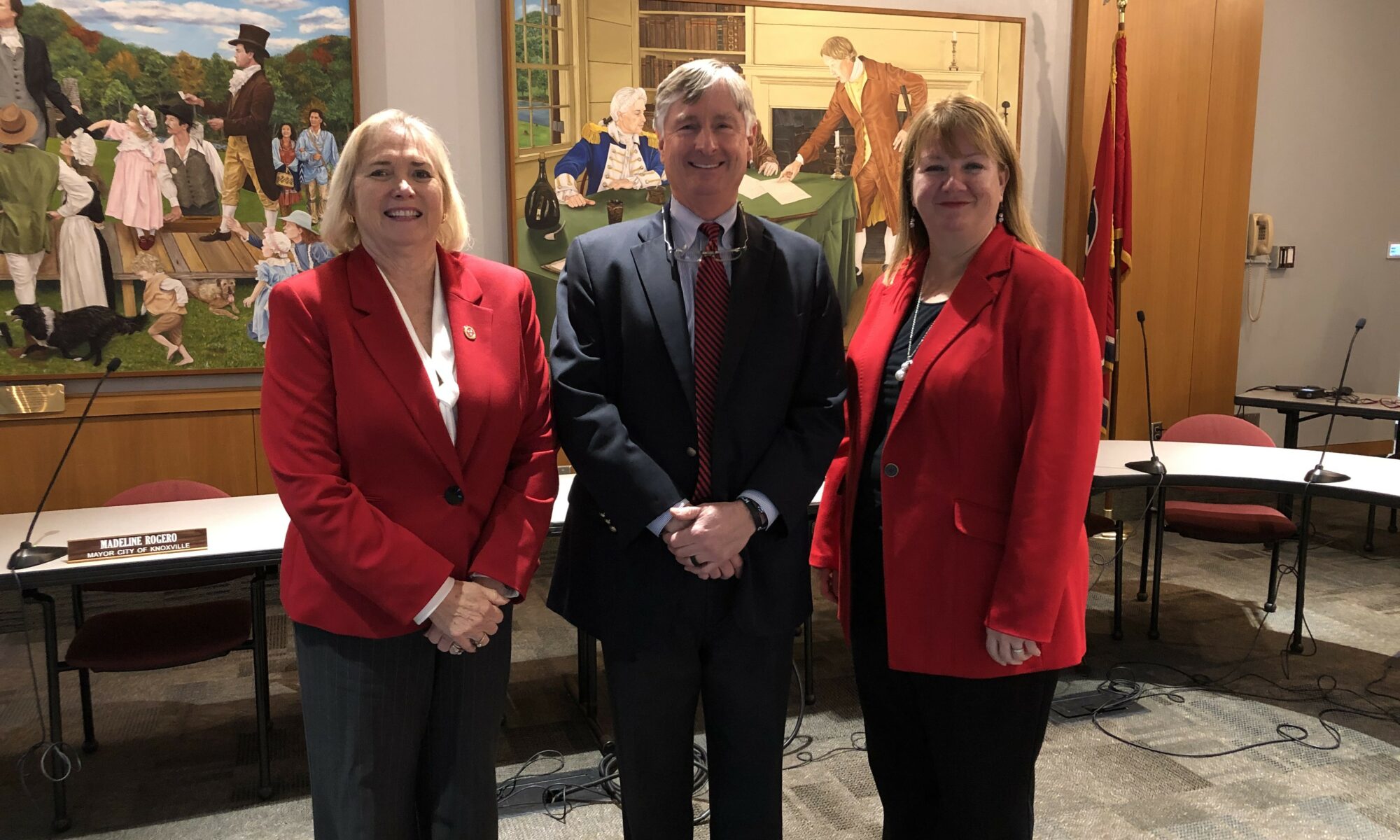
Noteworthy Attendees at December TPO Executive Board Meeting
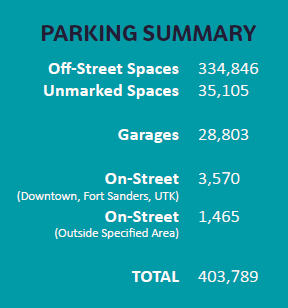
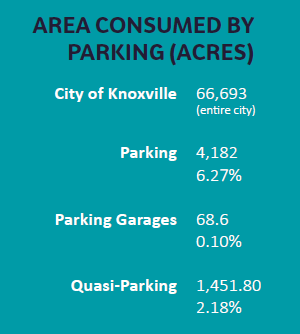 In the entire city, 4,182 acres are consumed by parking, which is 6.27 percent of the city’s land. Another 1,452 acres are consumed by quasi-parking, which is an additional 2.18 percent. In our analysis, we looked at how much space (percent) parking took up in each land use. The ranking was:
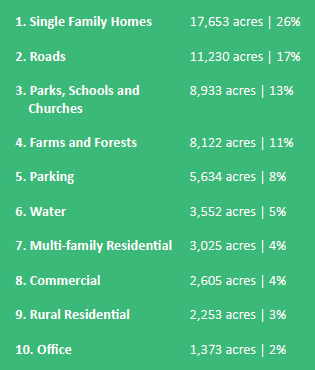 This analysis shows us that roughly a quarter of our city is consumed by pavement, with 17% dedicated to roads and 8% to parking. We put this information together and took it to Knoxville’s Park(ing) Day event, which took place on Gay Street on September 20. The event is recognized around the world by groups and individuals who claim a parking space for the day and dedicate it to human use instead of a parked car. Many people create small park spaces, drawing attention to the incredible amount of space our cities have dedicated to cars and how that space could be repurposed for people to use.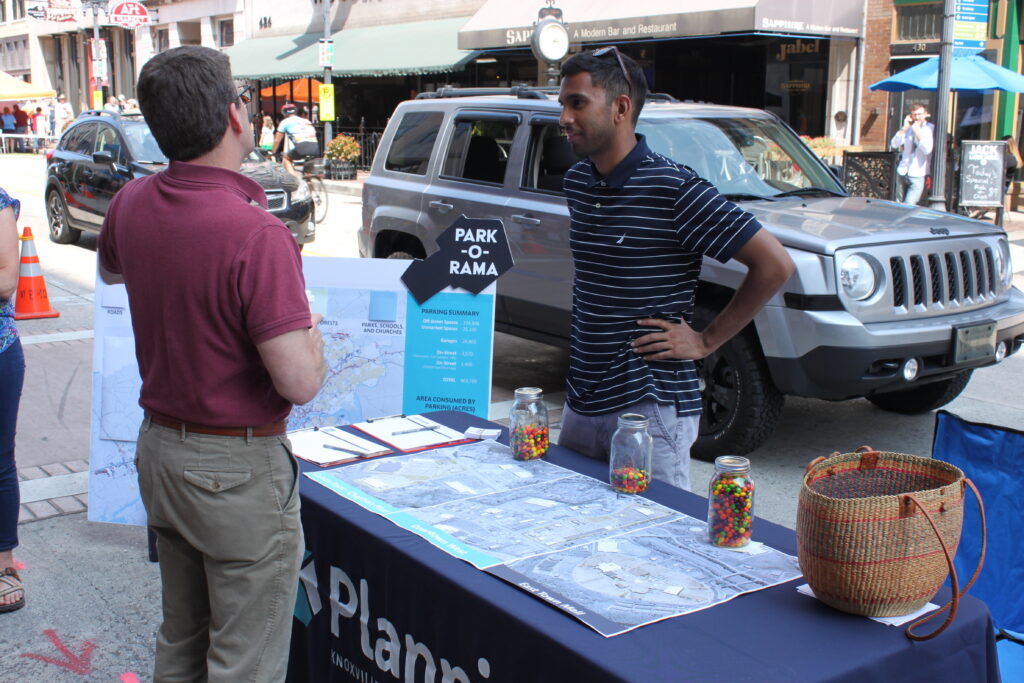
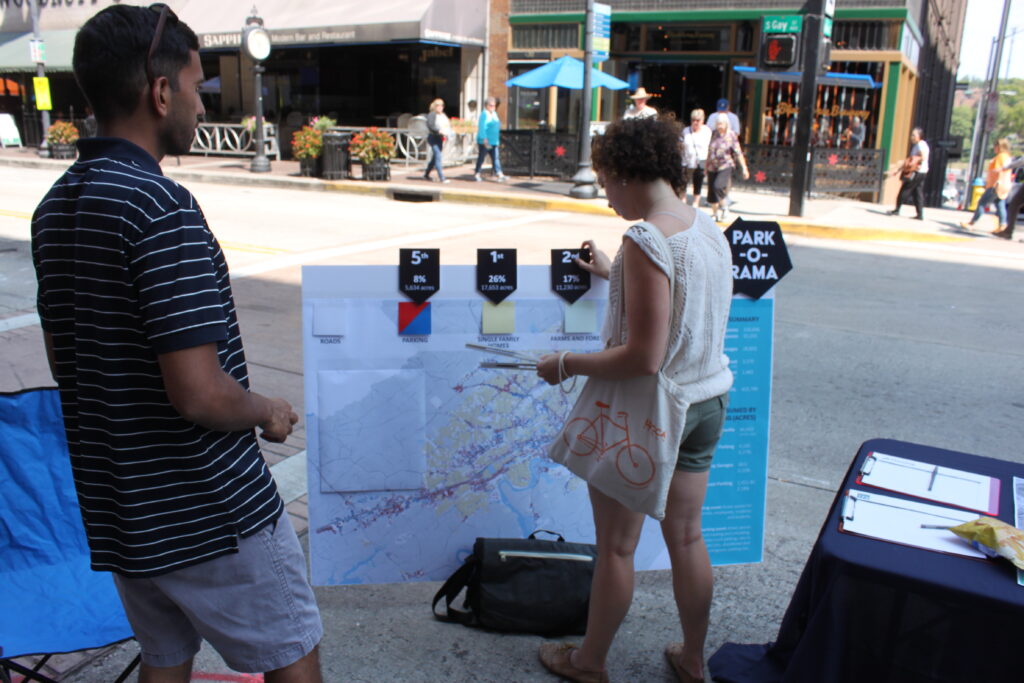
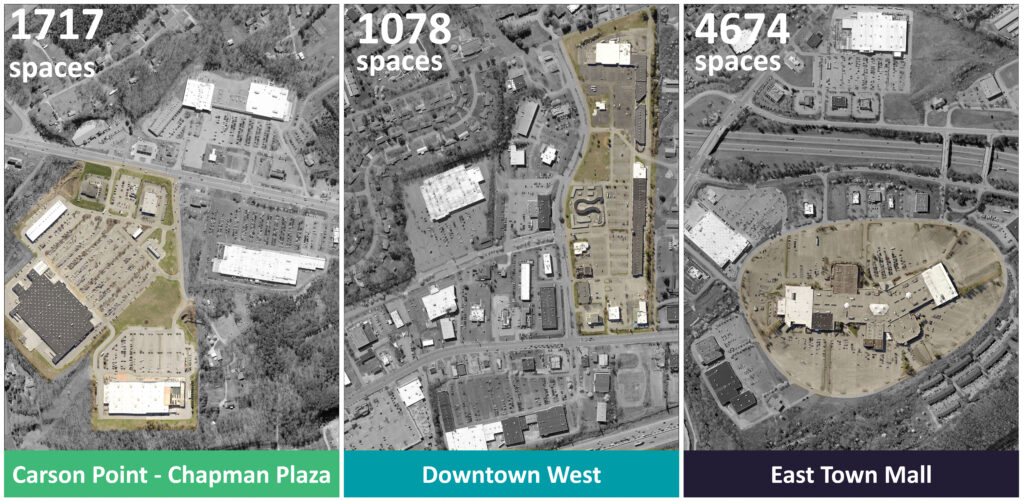
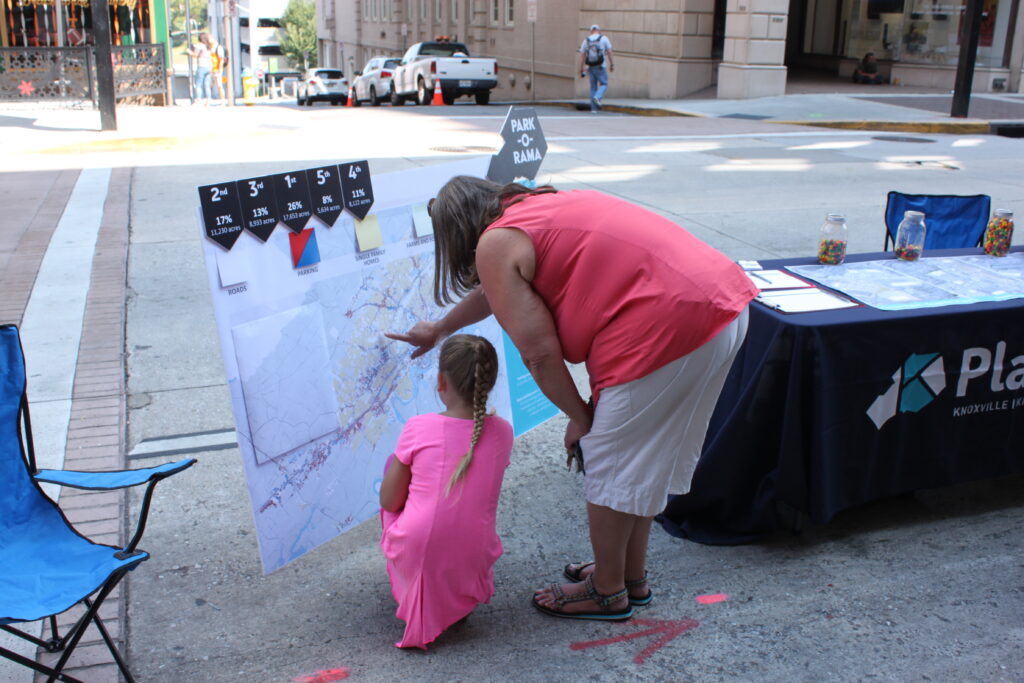 At the event, we had an activity set up where we asked participants to guess the percentage of land consumed by different uses in the city. Most people were surprised by how much land was dedicated to cars, especially when compared to other uses. We also asked people to guess how many parking spaces there were at East Town Mall, Downtown West, and Carson Point on Chapman Highway. They were again surprised by just how much parking is located at these locations.
  Finally, we had information set up to get people thinking about possible redevelopment opportunities for all those parking lots. We often hear that development opportunities within the city limits are limited because almost all the land has already been developed. But with the amount of space taken up by parking (and much of it underutilized) and the increased flexibility allowed within the city’s updated zoning ordinance, which is set to go into effect January 1, 2020, there are opportunities to make use of those spaces. An example of that is the announcement of Stockyard Lofts, a mixed-use development proposed for what is currently a parking lot in the Old City. Planning’s interest in this was sparked by the CityLab article, “Parking has Eaten American Cities,” which compares the amount of land consumed by automobile parking in five other U.S. cities and considers the implications of that use. So, has parking eaten Knoxville? Our analysis shows that eight percent of our city is taken up by parking. That may not sound like a lot, until you consider how much of that space is underused or unused. Taking that in account allows us to start thinking about how we can reuse and repurpose some of those spaces, whether it’s by creating a small park or a mixed-use development with 152 apartments and 5,000 square feet of retail space.


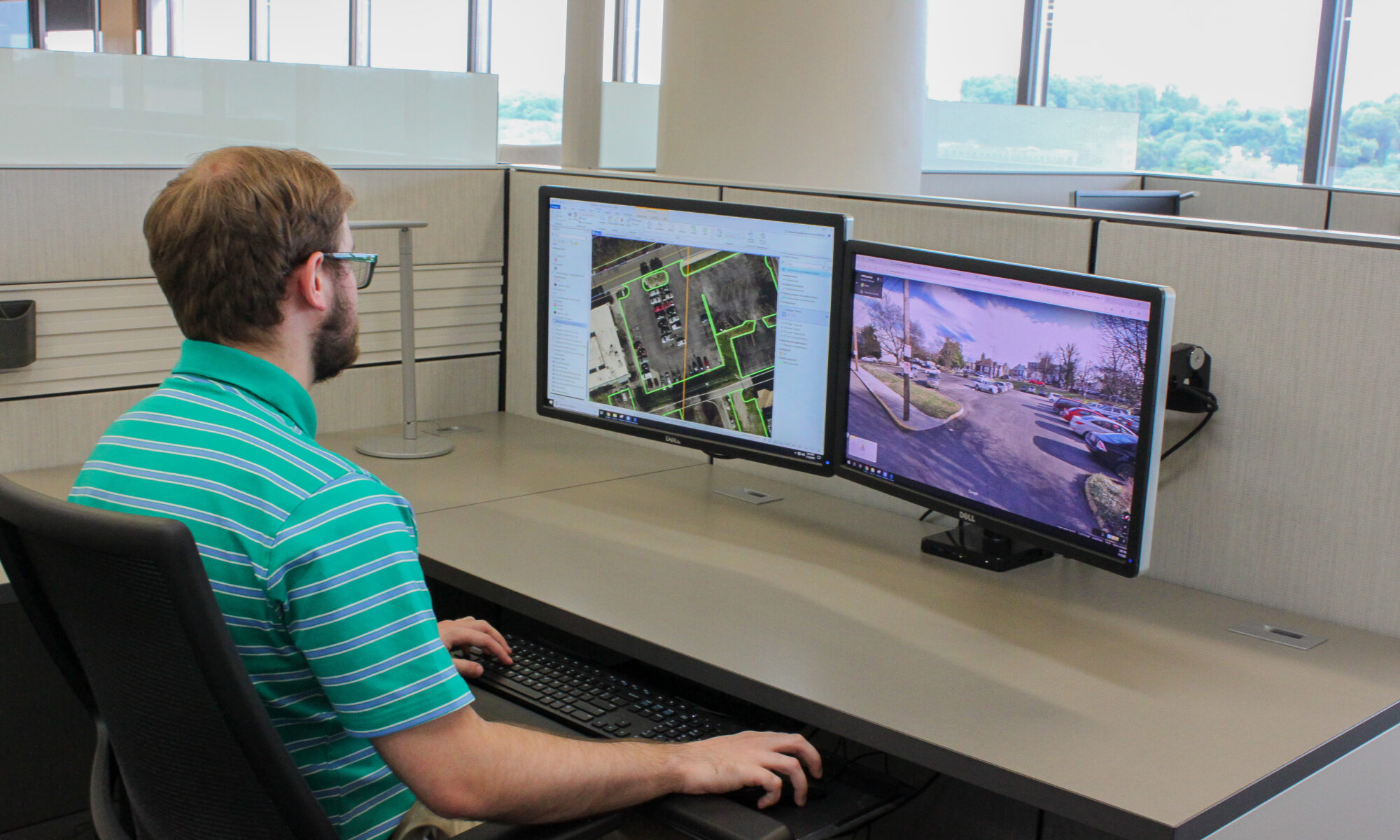
Intrigued by this work, the TPO wanted to know how Knoxville compares. Staff coordinated with the University of Tennessee – Knoxville to start the project through an undergraduate GIS class. More than 142,000 parking spots were identified after reviewing less than half of off-street parking in the city!
To complete this project, TPO hired Brennan Wilson as an intern to continue counting parking spots and analyze the final data. Brennan graduated from UT – Knoxville in May with a bachelor’s degree in geography. Working in the KGIS database, he is reviewing and counting parking areas and parking lots, developing methods to inventory on-street parking, and developing analyses such as parking per capita and parking per gross floor area on commercial parcels.“I’m hopeful that my work can help make Knoxville a more environmentally conscious and efficient city while also exploring alternative travel methods,” Brennan said when asked about the project.
We’re looking forward to digging into his findings once the project is complete. We expect that the results will help guide future planning efforts and could eventually change the landscape of our city.